
An Introduction to Heian Beauty Ideals
When we think about beauty in historical Japan, the Heian period (794-1185) feels almost like stepping into another world. It was a time when elegance mattered more than practicality, and beauty was carefully constructed through clothing, makeup, hair, and even the way a woman moved. This period also saw the invention of the Japanese writing system (hiragana and katakana), and it was during this time that the first considered written novel, Genji Monogatari, was created.
The ideals we associate with Heian beauty were shaped inside the imperial court in Kyoto (the old capital of Japan), among aristocratic women whose daily lives revolved around poetry, ritual, and refined taste.
Aristocratic Women and Cultural Inspiration
During the early Heian period, Japan was strongly influenced by China, especially the Tang dynasty (618-907). Fashion, makeup, and court culture absorbed many continental ideas, but over time, Japan developed its own distinctive aesthetic, one that more closely aligned with the values and ideals pursued by the Yamato people (the term used by the Japanese to refer to themselves during this period).
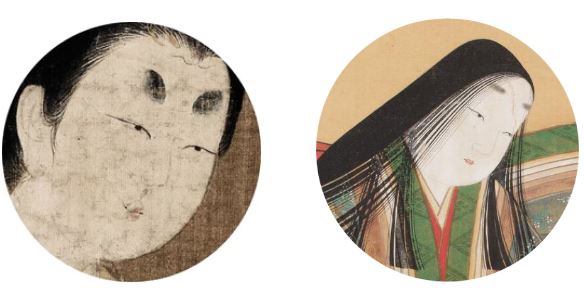
A Tang dynasty woman (left) and a Heian period woman (right)
For aristocratic women, beauty wasn’t about standing out; it was about harmony, restraint, and elegance. A beautiful woman was someone who appeared calm, cultivated, and emotionally refined, someone whose appearance reflected education and sensitivity rather than physical strength or bold expression. We can glimpse this ideal through paintings and how women are represented in them. Yamato-e, a distinctive artistic style of the time, clearly illustrates this ideal (If you’re interested in the Yamato-e style, you can read more in our blog here).
Makeup That Transformed the Face
Heian makeup was striking, but not in the way we might expect today. Instead of enhancing natural features, it deliberately transformed them.
For example: the face was painted completely white using rice-based powders, creating a smooth, pale surface associated with nobility and purity. Natural eyebrows were shaved off and redrawn higher on the forehead in a style called hikimayu, giving the face a serene, almost otherworldly expression.
One of the most surprising beauty practices was ohaguro, the blackening of teeth. While this may sound strange now, black teeth were considered beautiful and sophisticated. They symbolized maturity, loyalty, and high social status, especially among married women. White teeth, by contrast, were often associated with childhood or lower classes.
Take a look at this video, where a Japanese YouTuber recreates the Heian look!:
Hair as a Hidden Source of Attraction
Hair was perhaps the most important feature of all. Heian women wore their hair extremely long, straight, and loose in a style known as suberakashi. The longer, darker, and shinier the hair, the more attractive it was considered.
Historical sources suggest that women used natural oils, likely camellia oil, to keep their hair smooth and glossy. Shiny hair was a sign of youth, health, and refinement.
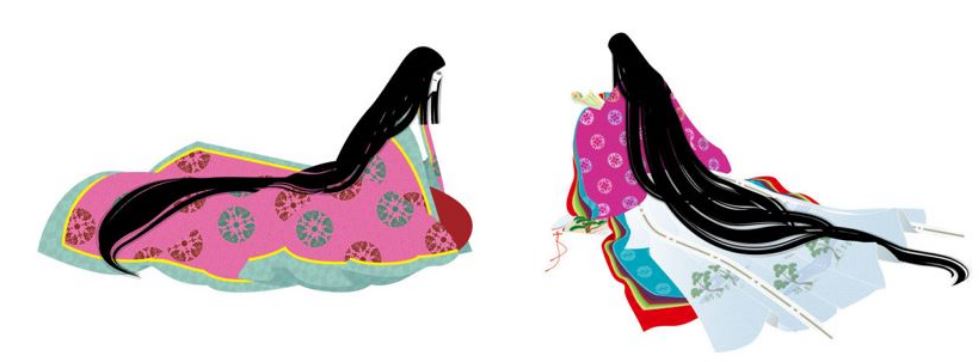
What makes this especially fascinating is the social context: men and women rarely saw each other face to face. Courtly interactions often took place behind screens or curtains, and lovers exchanged letters containing poems. A man might catch only a fleeting glimpse of a woman’s hair, and that small, intimate detail could spark attraction and begin courtship.
At the Heian court, women lived deliberately out of sight, which only heightened their allure. A glimpse of hair or clothing slipping into view stirred a sense of mystery and desire, fueling the fantasies that men longed for.
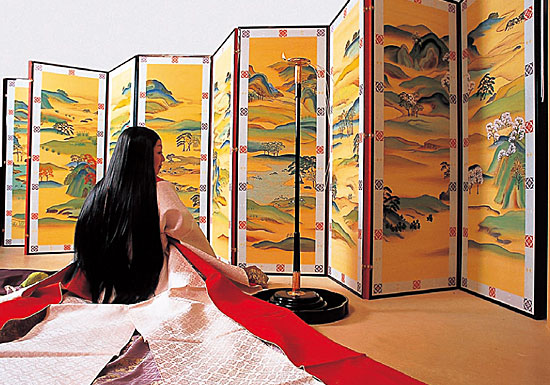
A demonstration of how Heian women at court lived behind screens, separated from the outside world. Photo credits to 風俗博物館
Layers of Silk and the Art of Dressing
Heian clothing was just as elaborate. Aristocratic women wore multiple layers of silk robes, the most famous being the junihitoe, often described as “twelve layers” (yes, women wore twelve layers of kimono, making it extremely heavy and difficult to move in. This is why Heian women typically did not move around much during the day!).
The visible edges of each layer were carefully coordinated by color and season, inspired by nature and poetry. Dressing well meant understanding subtle color harmony, not following trends.
Movement was also slow and controlled, reinforcing an image of calm elegance. Clothing shaped behavior as much as appearance, encouraging grace, patience, and composure.
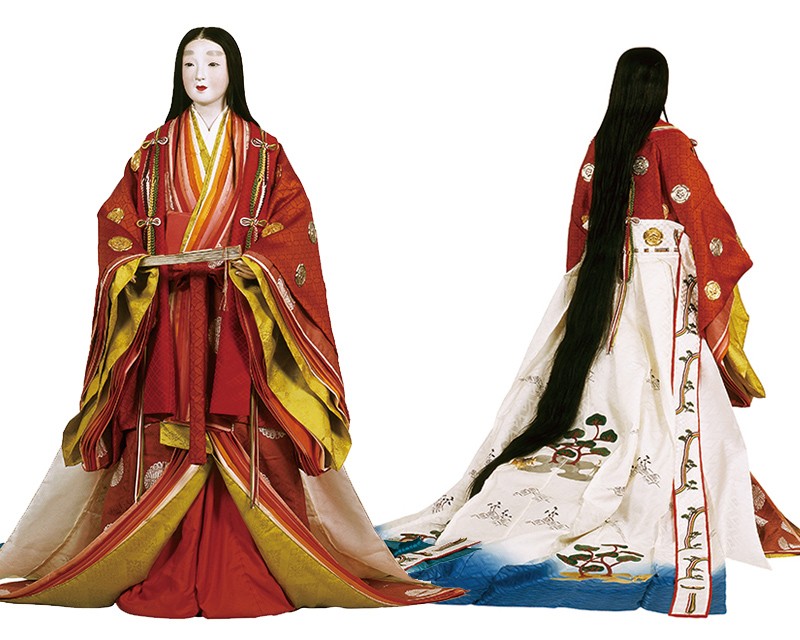
Photo credits to: 日本服飾史
From Heian Faces to Noh Masks
This is where things get especially interesting: centuries later, when Noh theatre developed, the female masks used on stage reflected many of these same beauty ideals.
Noh masks representing women often have pale, smooth faces, black teeth, minimal expression, and a quiet, restrained presence. The eyebrows are faint or positioned high, and the overall impression is one of emotional control rather than realism. Even when a mask represents a young woman, her beauty feels distant and contained.
This isn’t a coincidence: Noh aesthetics are rooted in older courtly values, and the image of femininity shaped during the Heian period left a lasting imprint.

Beauty Through Suggestion, Not Display
What ties all these elements together is the Heian fascination with suggestion. Beauty wasn’t meant to be fully visible or immediately understood. It was layered, hidden, and revealed in pieces through the flutter of a sleeve, a brief glimpse of hair, or a delicate exchange of poetry. Rather than making an instant visual impact, Heian beauty depended on the imagination. It was intimate, emotional, and deeply rooted in cultural knowledge.
If you found this glimpse into Heian beauty intriguing, we’d love to share more about this fascinating period in Japanese history or even explore other cultural periods in Japan! Feel free to comment and let us know what you’d like to learn more about ✨


1 Comment. Leave new
The emphasis on yamato-e and feminine ideals is fascinating. For a modern take on traditional beauty, check out Itamoon—their kawaii-style bags are a blend of the past and present.
https://itamoon.com/